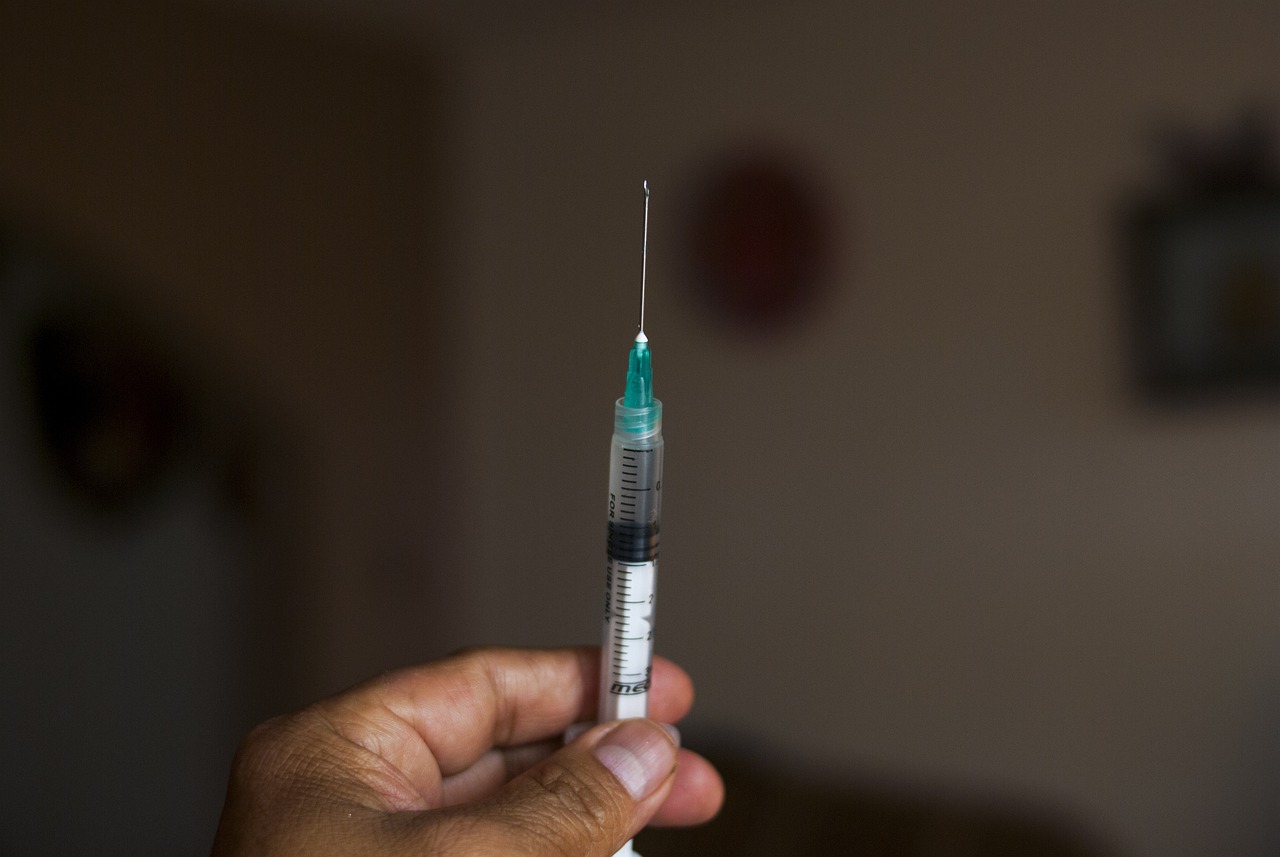

Syringes play an important role in many aspects of healthcare. Syringes come in a range of capacities, usually measured in millilitres (mL) or cubic centimetres (cc). The most suitable option depends on the amount of liquid being measured, the precision needed and the intended use. For injections, whether the medication is administered subcutaneously (under the skin) or intramuscularly (into the muscle) can also influence the syringe and needle specifications required.
Below, we explain the most common capacities, how to read their markings and what to consider when choosing the right size.
Key takeaways
- Syringe capacity is the maximum volume the barrel holds, not the amount currently inside it.
- 1 mL and 1 cc are the same volume, so the two units can be used interchangeably for liquids.
- Smaller syringes often have finer graduation lines, which can make small volumes easier to read.
- A larger syringe is not automatically better. Using one that is much bigger than the volume you need can make the reading harder.
- Tip type matters as much as capacity. Luer Slip, Luer Lock, catheter, oral and enteral tips are built for different uses.
- Single-use syringes should not be reused unless the manufacturer states they are designed for it.
- If you are unsure, ask a healthcare professional or contact the supplier before you buy.
Understanding Syringe Sizes and Capacities
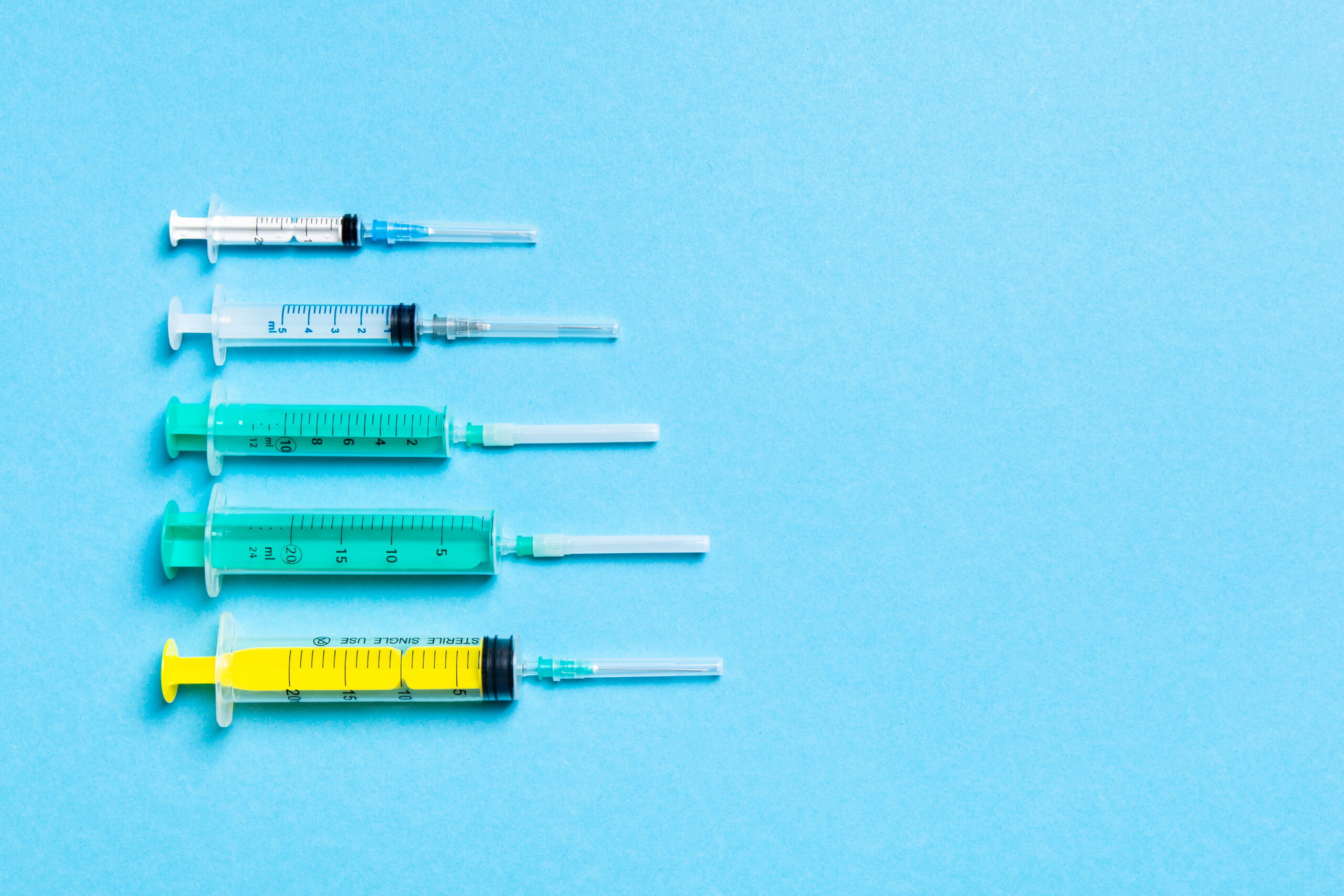
Syringes come in different sizes to accommodate everything from very small liquid measurements to larger fluid volumes. Their capacity refers to the maximum amount of liquid they can hold when the plunger is fully drawn back.
Common capacities range from small 0.3 mL syringes to larger 60 mL options.
| Syringe capacity | Common applications |
| 0.3 mL | Very small-volume measurements |
| 0.5 mL | Small-volume medication measurements |
| 1 mL | Precise measurements of small liquid volumes. Often used in healthcare, medication preparation and laboratory settings |
| 2–3 mL | Most commonly used general-purpose sizes. It is often used for small-to-moderate volumes and gives a sensible balance between capacity, handling and reading accuracy. Typical uses include clinical settings, medication administration and sample handling. |
| 5–10 mL | It is often used for measuring oral medications, flushing and other clinical tasks. |
| 20–60 mL | Larger syringes suit irrigation, fluid transfer, laboratory procedures and feeding through compatible enteral devices. They reduce the need for repeated filling when you are moving a lot of liquid. Their graduations are spaced further apart, so they are generally less suited to measuring very small quantities. |
Note: These are general examples, not universal recommendations. The appropriate syringe depends on the medication, prescribed volume and intended application.
Choosing an appropriate capacity is important for accurate measurement and ease of use. A syringe that’s too large for the volume you’re measuring can make smaller amounts harder to read, as the liquid may only reach the first few markings on the barrel. A suitably sized syringe generally provides clearer graduations and better control when drawing up liquid.
What Do the Numbers on a Syringe Mean?
The numbers and lines along the syringe barrel are called graduations. They indicate how much liquid is inside the syringe and help you measure specific volumes.
There are two types of markings to look for:
- Major markings: The numbered lines indicate larger measurement increments, such as 1 mL or 5 mL.
- Minor markings: The smaller lines between the numbered markings represent smaller increments, such as 0.1 mL or 0.5 mL.
The spacing between the lines depends on the syringe size and design. For example, a 1 mL syringe may have smaller measurement increments than a 10 mL syringe, making it easier to measure very small volumes.
A helpful tip: Hold the syringe at eye level when checking the measurement. Read the marking against the leading edge of the rubber stopper (the edge closest to the syringe tip), rather than the back of the stopper.
What Is the Difference Between mL and cc?
You might see syringe capacities listed in millilitres (mL) or cubic centimetres (cc). Although the terms sound different, they measure exactly the same volume:
1 mL = 1 cc
Millilitres are the standard metric unit for measuring liquid volume, while cubic centimetres describe volume based on the space occupied by a cube measuring one centimetre on each side. Both represent the same amount.
You’ll often see cc used in older medical terminology or on certain syringe products, while mL is more commonly used in modern medical documentation.
Insulin syringes are slightly different because they’re usually marked in units rather than millilitres. These units measure insulin doses and are designed to match specific insulin concentrations.
One important consideration: Syringe capacity, measurement markings and intended use are separate factors. A syringe that holds the correct volume isn’t automatically suitable for every application. For injectable medications, the prescribed dose, route of administration, syringe design and compatible needle specifications must all be considered. Always follow the product instructions and guidance from your healthcare professional.
Syringe Types and What Size Suits Each Use
- Standard medical syringes: Standard syringes are general-purpose and usually come in capacities from 1 mL to 60 mL. They are used across clinical and laboratory settings. Syringe capacity and needle size are separate specifications, and some syringes are supplied without a needle, so check what is included and whether the tip is compatible with the needle or device you plan to use.
- Insulin syringes: Insulin syringes are calibrated for insulin and are marked in units rather than millilitres. They commonly come in 0.3 mL, 0.5 mL and 1 mL capacities. On a U-100 insulin syringe, 1 mL equals 100 units, so a 0.5 mL syringe holds up to 50 units and a 0.3 mL syringe up to 30 units.
- Oral medication syringes: Oral syringes measure and give liquid medicines by mouth. They commonly come in 1 mL, 5 mL, 10 mL and larger capacities, and they have needle-free tips designed for the purpose. A marked oral syringe is a more reliable way to measure liquid medicine than a household spoon. Choose a capacity that suits the prescribed amount, check that the markings are clear, and follow the medicine label and your healthcare professional’s advice.
- Irrigation syringes: Irrigation syringes are designed to move larger volumes of liquid, so they are usually found in 20 mL to 60 mL capacities, often with a catheter-style tip. Uses include general irrigation and, under professional guidance, wound irrigation.
- Enteral feeding syringes: Enteral syringes give liquid nutrition or medication through compatible feeding tubes. They are usually larger, including 30 mL and 60 mL options. Use dedicated enteral syringes and compatible connectors, because they are designed to reduce connection errors with other types of devices.
- Laboratory use: For laboratory work, volume, precision and compatibility with your equipment all shape the choice. Specialised applications can need particular syringe materials or designs, so check the product details and your protocol before you buy.
Understanding Needle Sizes: Gauge and Length
Choosing a syringe is only part of the process if you’re administering an injection. You’ll also need to consider the needle’s thickness (gauge) and length. These specifications affect how the needle is used and where medication is delivered.
Needle gauge (G) refers to how thick or thin a needle is. The higher the number, the thinner the needle. For example, an 18G needle is thicker with a wider opening, whereas a 30G needle is thinner with a smaller opening.
The gauge you need depends partly on how thick the medication is:
- Lower gauge (thicker needle): May be suitable for drawing up thicker medications.
- Higher gauge (thinner needle): Often used for thinner medications.
Needle length refers to how long the needle is, measured from its tip to the point where it connects to the syringe. Unlike gauge, needle length is generally measured in millimetres (mm) or inches.
The needle must still be appropriate for the medication and injection method. Your healthcare professional or pharmacist can confirm the correct gauge.
What Size Syringe Should I Choose?
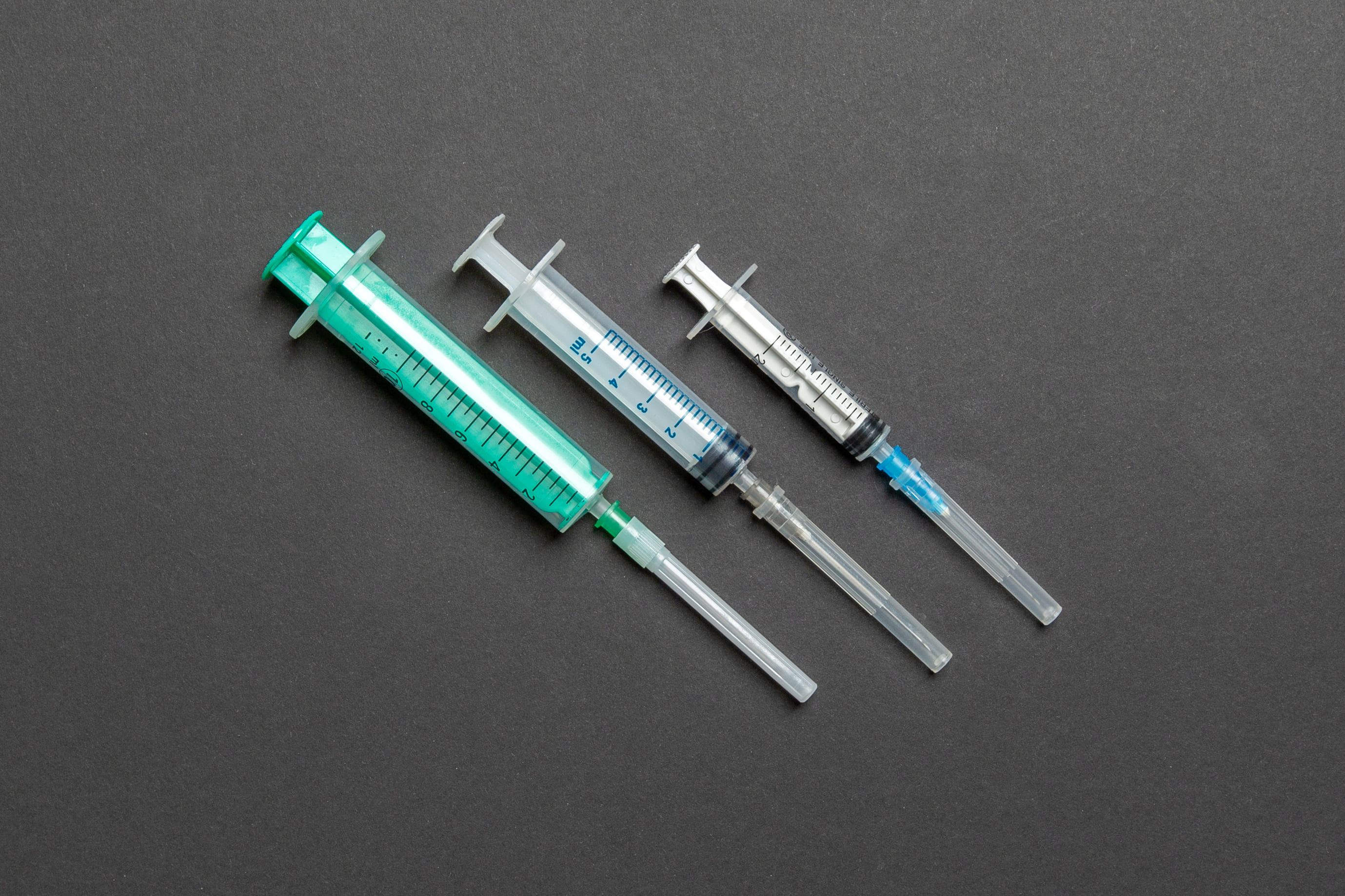
When choosing a syringe, consider how much liquid you’re measuring, how precise the measurement needs to be and what the syringe will be used for. As a general starting point, choose the smallest syringe that comfortably accommodates the required volume. This can make the graduation markings easier to read and give you better control when measuring smaller amounts.
Additional considerations include:
- Consider the Volume of Liquid You Need to Measure: Start by looking at the volume you need to measure or administer. The syringe must have enough capacity to hold the full amount, but choosing one that’s significantly larger than necessary can make smaller measurements harder to read.
- Measurement Accuracy and Graduation Increments: The graduation markings determine how precisely you can read the volume inside a syringe. Smaller syringes often have finer increments, making them useful when measuring small quantities of liquid. However, finer graduations don’t automatically mean a syringe is more accurate. The manufacturer’s specifications, syringe design and measurement tolerances also play a role. Always check the markings on the specific product to make sure they’re suitable for the volume you need to measure.
- Syringe Tip and Connection Type: Syringes come with different tip designs, each intended for particular applications. The connection type determines how the syringe attaches to a needle, tubing or other compatible equipment.
- Luer Slip: Uses a push-on connection to attach a compatible needle. It’s designed for straightforward attachment and removal.
- Luer Lock: Features a threaded connection that twists into place, helping secure the needle and reduce the risk of accidental disconnection.
- Catheter Tip: Has a longer, tapered nozzle designed to connect with compatible catheters or tubing, often for irrigation and fluid delivery.
- Oral/Enteral Tip: Designed for administering medication or nutrition by mouth or through compatible feeding tubes. These syringes use dedicated connections rather than standard injection fittings.
- Intended Application: While some are intended for injections, others are specifically made for measuring oral medications, irrigation, feeding or laboratory procedures.
- Disposable vs Reusable Syringes: Disposable syringes are intended to be used once and then safely discarded. They are commonly supplied sterile for injection-related applications, helping reduce the risk of contamination and infection when handled correctly. Reusable syringes are specifically designed for repeated use and must be cleaned, maintained and sterilised according to the manufacturer’s instructions and relevant infection-control requirements. Not all syringe materials or designs can withstand repeated cleaning or sterilisation.
- Medication viscosity: Thicker medications may require a different needle gauge from thinner liquids. Follow the medication instructions and seek advice from a pharmacist or healthcare professional about suitable specifications.
- Injection location and method: Subcutaneous and intramuscular injections require different needle lengths and may have different gauge requirements. The appropriate specifications depend on the medication, injection site and individual circumstances.
- Dead space: This refers to the small amount of liquid that can remain in the syringe tip or needle hub after the plunger is fully depressed. For very small medication volumes, this retained amount may be relevant. Low-dead-space designs can help minimise residual medication, but suitability depends on the specific syringe and needle combination.
A note on safety: Always use the syringe and needle specifications recommended for your medication and route of administration. If you’re unsure about the correct capacity, needle size or measurement markings, ask your doctor, nurse or pharmacist before administering an injection.
Safety Considerations When Choosing and Using a Syringe
Picking the right syringe is part of handling liquids safely. Keep these points in mind:
- Use the right syringe for the job. A syringe built for oral use, irrigation or laboratory work should not be swapped for another purpose.
- Check for incompatible connections. The wrong tip or connector can cause leaks or a mismatch with other devices.
- Inspect the product. Check the packaging, sterility indicators, expiry date and condition of the syringe before use, and do not use damaged or expired items.
- Treat single-use items as single-use. Syringes and needles for injection should be sterile and used once, unless the manufacturer clearly states otherwise.
- Keep handling clean. Good hygiene reduces contamination risk. Our article on aseptic technique at home explains the basics.
- Ask when unsure. If you are not certain which syringe to use or how to measure a medication, speak to a doctor, nurse or pharmacist.
Find the Right Syringe Size for Your Requirements
Choosing the right syringe comes down to finding the right balance between capacity, measurement accuracy and intended use. Smaller syringes may be better suited to measuring low volumes, while larger options offer more capacity for irrigation, fluid transfer and other higher-volume applications.
Before making a selection, consider the volume you need to measure, the graduation markings, the syringe tip and whether the product is designed for your intended application. For injectable medications, always follow the prescribed instructions and check that the syringe and needle specifications are appropriate.
At Aussie BacWater, we offer a range of syringe options to suit different requirements. Explore our syringe range to compare available sizes and specifications, or get in touch with our team if you need more information about a particular product.
The information in this article is intended for general educational purposes only and should not be considered medical advice. Syringe selection, medication measurement and injection practices should always follow the relevant product instructions and guidance from a qualified healthcare professional. Always consult your doctor, nurse or pharmacist if you are unsure which syringe size, needle specifications or administration method is appropriate for your needs.